
Insights · Logistics Growth Marketing
Effective digital marketing for logistics goes beyond driving website traffic. By combining SEO, clear messaging, and strong calls to action, logistics companies can convert visitors into qualified leads and drive sustainable growth.
By Nathan Misirian · October 21, 2026
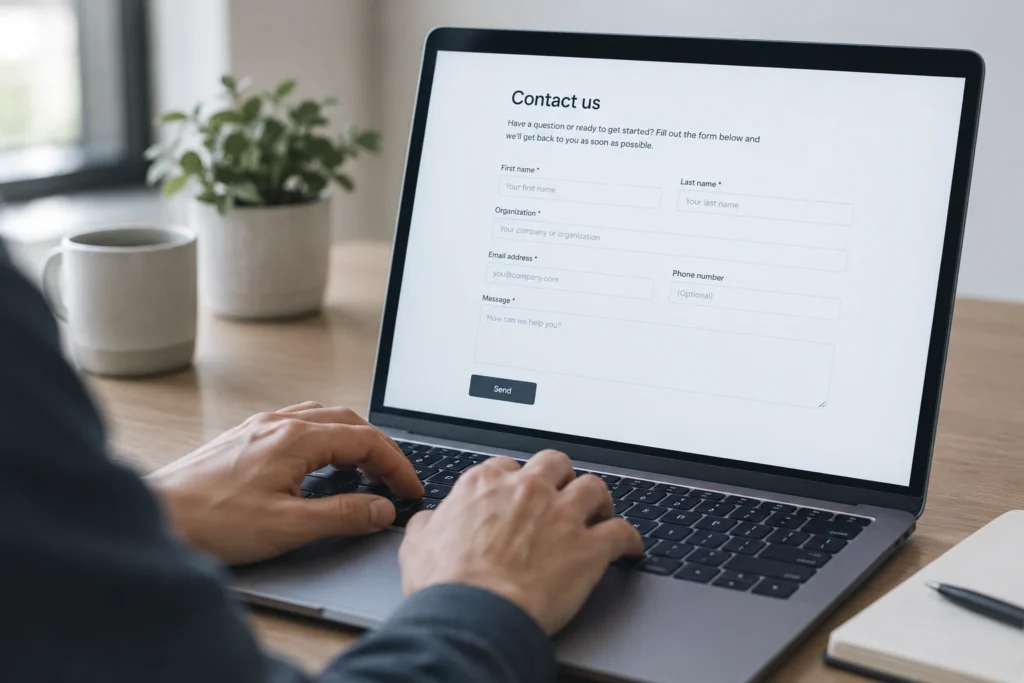
A logistics website can look polished, rank in search, and still generate zero meaningful inbound leads.
That is one of the most frustrating problems for growth-minded logistics companies. You invest in a website, publish service pages, improve visibility, and still do not see enough qualified opportunities come through the door.
In many cases, the problem is not traffic alone. The problem is conversion.
Clear, specific messaging helps the right buyers recognize your value. Trying to speak to everyone can make it harder for anyone to see why they should choose you.
Strong digital marketing for logistics does more than help your company appear in search. It helps the right prospects quickly understand what you do, why they should trust you, and what step to take next. That is where many logistics websites fall short.
For freight forwarders, 3PLs, trucking companies, warehouses, and other logistics providers, a website has to do more than list services. It has to support real lead generation through clear messaging, useful content, visible trust signals, and a buying path that feels easy to follow.
Connect with Autumn Consulting to talk about your logistics digital marketing strategy and identify where your website may be losing opportunities.
Logistics marketing often underperforms because it focuses on just having a website rather than building one that converts.
Many companies publish broad service pages, generic brand language, and vague calls to action, then assume more traffic will solve the problem. It usually does not. If the content does not connect to what buyers are actually trying to solve, the site becomes an online brochure instead of a business development tool.
Buyers in logistics are rarely browsing casually. They are often trying to solve a real operational issue, evaluate a provider quickly, or compare companies that appear similar on the surface. If your website does not make your fit and value obvious, they leave.
Your website needs to answer practical buyer questions, reduce uncertainty, and make the next step clear.
A qualified buyer may be looking for freight support in a specific region, warehousing help, better visibility, or a logistics partner with experience in their type of operation. If your website does not address those needs quickly and clearly, they move on.
This is why SEO for logistics and website conversion strategy have to work together. Visibility brings people in. Clear content and trust-building help turn that attention into qualified conversations. A high-converting logistics website connects search intent to a relevant service page, establishes credibility, and gives qualified prospects a clear next step.
Good SEO for logistics should do more than increase rankings. It should bring the right visitors to the right pages and help them move closer to a conversation.
That means SEO and conversion strategy need to work together. A page that ranks but does not build trust, explain relevance, or guide the buyer forward will still struggle to generate leads. Search visibility and conversion strategy need to work together.
A logistics company’s website should help prospects quickly understand:
What services you provide
What industries or freight types you support
What regions you serve
Why your company is credible
How to take the next step
To improve logistics website SEO, align each service page with a specific buyer need, use descriptive headings, answer common questions, and include relevant internal links and conversion-focused calls to action.
When digital marketing for logistics is built around real buyer intent, it improves both search visibility and conversion quality. It attracts people who are actively looking for answers and gives them enough clarity to continue the buying process.
AI optimization for logistics begins with content that is easier to understand, easier to scan, and easier to trust.
As AI-driven search tools become a bigger part of how buyers research vendors, website content needs to answer specific questions in clearly organized sections. A page filled with generic statements or repetitive marketing language is harder for both people and AI systems to interpret.
Clear content helps search engines and AI tools identify:
what your company does
who you help
where you operate
what makes your services relevant
why a buyer should contact you
For answer engine optimization (AEO) and generative engine optimization (GEO), provide direct answers to specific questions, use descriptive headings, and support claims with verifiable company information, relevant experience, and case studies.
This is one reason strong structure matters so much. Each section of the page should communicate one useful idea clearly. That gives your content a better chance of showing up in search, being surfaced in AI-generated answers, and helping buyers make a decision faster.
While clear structure improves machine readability, inclusion in AI-generated answers is not guaranteed and also depends on relevance, source quality, and the search platform.
Turning the right traffic into leads?
Your website should do more than attract visitors. It should help the right logistics buyers understand your services, trust your expertise, and take the next step.
Before a logistics buyer fills out a form or makes a call, they usually need more than a service list. They want signs that your company understands their situation and can handle the complexity behind it. That is why trust and relevance matter so much in logistics website performance.
Making these details easy to find rather than forcing buyers to search for evidence that your company is a good fit provides credible proof that your services are trustworthy. Clear company information will always be more relevant than generic copy.
Logistics website SEO becomes more effective when it reflects where and how your company actually operates.
Many buyers search with geographic intent because they need help in a specific market, region, or corridor. If your website only speaks in broad national terms, you may miss qualified searches tied to your actual service footprint.
Why Logistics Websites Fail to Convert: Digital Marketing for Logistics
Useful location-specific pages might target topics like:
Freight forwarding in Chicago
3PL services in Dallas
Warehousing in Los Angeles
LTL shipping in Atlanta
These pages should do more than swap out city names. They should explain what you offer in that market, what kinds of customers you support there, and why your company is relevant to that location.
When location-specific content reflects your actual services and capabilities, it helps search engines and buyers connect your company to the right market.
If your website is getting attention but not generating qualified inbound leads, the problem may be deeper than traffic alone.
Start by evaluating whether your website clearly communicates your services, demonstrates credibility, answers buyer questions, and makes it easy to take the next step. These elements work together to support stronger search visibility and more qualified inquiries.
Autumn Consulting helps logistics companies improve the parts of their digital presence that directly affect growth, including digital marketing strategy, SEO, content clarity, AI-search readiness, and conversion-focused website strategy.
Connect with Autumn Consulting to discuss your website, identify where qualified opportunities may be getting lost, and determine which improvements could make the biggest difference.
Digital marketing for logistics is the strategy of using website content, SEO, conversion-focused messaging, location visibility, and trust-building assets to help logistics companies attract qualified inbound leads. It should reflect how shippers, procurement teams, operations leaders, and supply chain decision-makers actually search for solutions.
A logistics website can get traffic but still fail to generate leads when the content does not match buyer intent, the calls to action are weak, or the site does not build enough trust. In many cases, the issue is not visibility alone. The issue is whether the site helps the visitor quickly understand what you do, who you help, and why they should contact you.
SEO for logistics helps generate leads when it brings qualified visitors to pages that answer real buyer questions and guide them toward a next step. Ranking alone is not enough. A logistics page also needs strong messaging, trust signals, and clear conversion paths so search traffic turns into real inquiries.
SEO for logistics is more specialized than general SEO because logistics buyers use industry-specific language, search with geographic intent, and often need proof of service fit before contacting a provider. A generic SEO strategy may increase traffic, but it will not always attract the right kind of logistics lead.
AI optimization for logistics means structuring your website content so AI-driven search tools can clearly understand your services, regions, industries served, and expertise. This usually involves stronger headings, clearer answers, better-organized sections, and content that directly addresses the questions logistics buyers ask during research.
AI systems are more likely to surface content that is clearly organized and easy to interpret section by section. If a logistics website uses vague language, broad claims, or repetitive filler, it becomes harder for AI tools to identify what the company actually offers. Clear content improves both human readability and machine understanding.
A logistics company website should include:
Clear service messaging
Industries served
Geographic service areas
Trust signals such as testimonials or case studies
Strong calls to action
Helpful educational content
Pages aligned to how buyers search
These elements work together to improve digital marketing for logistics and support better lead generation.
Logistics website SEO is stronger when it reflects where your company actually operates. Buyers often search by city, region, port, or corridor. When your site includes genuinely useful pages tied to those markets, it becomes easier for search engines, AI tools, and prospects to connect your services to the right geography.
For logistics companies, content that supports answer engine optimization and generative engine optimization usually includes:
Direct question-based headings
Concise answers near the top of sections
Clear service explanations
Useful FAQ content
Location-specific pages
Case studies and trust signals
Practical educational content tied to real buyer problems
The goal is to make each section strong enough to stand on its own as a useful answer.
A logistics company should look for outside digital marketing help when its website is not generating qualified inbound leads, its service pages are too generic, its SEO is not attracting the right traffic, or its content does not reflect how modern buyers search and evaluate providers. That is often the point where better strategy can improve both visibility and conversion.
We use cookies to improve your experience on our site. By using our site, you consent to cookies.
Manage your cookie preferences below:
Essential cookies enable basic functions and are necessary for the proper function of the website.
CleanTalk offers effective spam protection and website security solutions to enhance user experience.
Service URL: cleantalk.org (opens in a new window)
CloudFlare provides web performance and security solutions, enhancing site speed and protecting against threats.
Service URL: developers.cloudflare.com (opens in a new window)
Statistics cookies collect information anonymously. This information helps us understand how visitors use our website.
Google Analytics is a powerful tool that tracks and analyzes website traffic for informed marketing decisions.
Service URL: policies.google.com (opens in a new window)
Google reCAPTCHA helps protect websites from spam and abuse by verifying user interactions through challenges.
Vimeo is a video hosting platform for high-quality content, ideal for creators and businesses to showcase their work.
Service URL: vimeo.com (opens in a new window)
You can find more information in our Cookie Policy and .