
Insights · Growth Marketing
A strong 3PL growth strategy starts with five questions: where should you grow, which customers should you pursue, which markets fit your strengths, what pipeline is required, and whether your digital presence can support the plan. Use these questions to connect strategic planning with marketing, SEO, and qualified inbound growth.
By Nathan Misirian · September 9, 2026
strategic questions to answer before your 2027 plan is finalized

2027 strategic planning checklist for third-party logistics leaders
If your 3PL leadership team is planning to grow your business in 2027, start by clarifying which customers and markets deserve focus, what pipeline is required, and whether marketing and digital visibility can support that plan. Strong planning focuses on growth priorities. Then the business aligns sales, operations, marketing, and investment around those priorities.
If you lead a 3PL and your leadership team is building a 2027 strategy, here are five questions worth answering before the budget is finalized.
The 5 questions
The first step in strategic planning is deciding where growth should come from. That may sound obvious, but many logistics companies still approach planning with broad goals like “increase revenue” or “win more customers” without defining which growth paths matter most. A stronger business strategy identifies the specific areas where leadership wants to place real bets. That could include:
A useful leadership question is this: If we could only prioritize two or three growth bets in 2027, where would we invest? That changes the conversation from general growth language to strategic clarity. Instead of saying, “We want to grow,” your leadership team begins to say, “We want to grow warehousing demand in this region,” or “We want to increase transportation opportunities with this type of shipper.” That specificity is what turns business planning into real strategy.
Which questions should leadership pressure-test?
3PL STRATEGIC PLANNING · 2027
A strong growth strategy is not just about generating more leads. It is about pursuing qualified customers that fit your capabilities, margin goals, and long-term direction.
That matters because the easiest customer to win is not always the most valuable customer to serve. Some accounts look appealing because they are easier to close or bring immediate volume. But if they strain operations, create low-margin work, or fall outside your strengths, they can weaken the business over time.
Easiest to win
Easier to close and quick on volume — but can strain operations, create low-margin work, or fall outside your strengths.
Most valuable to serve
Fits your capabilities, margin goals, and long-term direction — the accounts worth building around.
That is why the planning process should include a sharper definition of the ideal customer profile. Without it, your team may end up optimizing for lead volume instead of profitable growth.
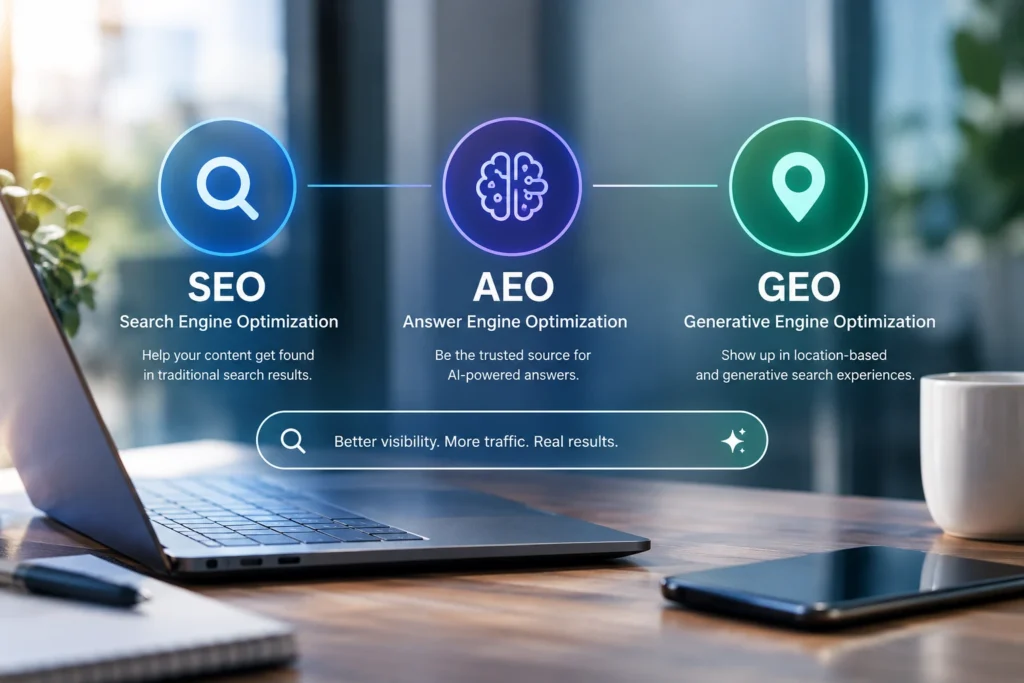
Defining the ideal customer also improves how your business approaches search. The questions, problems, and criteria used by your best-fit buyers should shape the content your website creates. Understanding the intent behind those searches is a core part of building sustainable SEO and AI search visibility. Read Why Search Intent Still Wins in the Age of AI to see how buyer questions connect to modern SEO, AEO, and generative search.
Leadership should ask:
Focusing on the right goals?
Schedule a Growth Marketing Strategy Meeting and we'll show you how to position your business for growth in the coming year
Another core part of strategic planning is deciding which markets are worth pursuing. Many logistics companies talk about market opportunity in broad terms. They may say the logistics market is growing, a region is active, or a certain segment looks promising. But strategic planning for logistics requires more than recognizing that opportunity exists. It requires determining whether your company is positioned to win there.
A practical planning question is this: Which markets combine real demand, strong strategic fit, and a believable path to differentiation? That is a better filter than simply chasing large or active markets.
Is there genuine, growing demand you can actually serve in that market?
Does the market align with your footprint, services, and where you want to go?
Can you clearly explain why a shipper should choose you over the alternatives?
For example, a region may look attractive because demand is growing, but that does not automatically make it a good bet. If your footprint is weak there, your offer is hard to differentiate, or your team cannot clearly explain why you should win, that market may be active without being strategic. For a 3PL, this may include evaluating:
This is where strategic planning becomes practical.
Many companies set a revenue goal and then build a budget based on what feels reasonable. But a better strategy works backward from the outcome. The logic should progress like this:
That framework forces clarity. It helps leadership stop talking about pipeline in abstract terms and start asking what level of opportunity creation is actually needed to support the business plan.
By the end of planning, leadership should be able to say:
Without that clarity, year-end planning for 3PLs often leads to underinvestment in the activities required to hit the revenue goal. That is what separates routine budgeting from real strategy.
This is one of the most overlooked parts of strategic planning for 3PLs.
Most leadership teams think about staffing and operational capacity during annual planning. Far fewer think strategically about whether their digital presence will actually help them win in the markets they want to pursue. But if your growth plan depends on being found by the right prospects, then your website, brand positioning, content, SEO, and calls to action are also part of the strategy.
The next question is how leadership should measure whether that digital presence is actually contributing to growth. Traffic alone may not tell the story. See The Changing Metrics of Website Success for a CEO-level framework focused on qualified inbound leads, conversion performance, sales opportunities, pipeline contribution, audience fit, and AI-driven visibility.
In practical terms, that means marketing should be budgeted as a growth enabler tied to target markets, target customers, and pipeline goals. It should not be treated as a separate line item added after the rest of the plan is already finished.
Now is the time for your team to reflect on how confident you are that your digital presence will help you get found by the right prospects in the markets where you want to grow. That process includes questions like:
For many 3PLs, the website still functions more like a brochure than a growth tool. The content may exist, but it may not reflect how real buyers search, compare options, and evaluate logistics partners. That is why marketing should not sit outside the annual planning conversation. It should be tied directly to the company’s growth strategy.
Autumn Consulting helps logistics companies create a growth marketing strategy with digital execution. That includes helping leadership teams clarify positioning, strengthen website content, improve SEO and organic visibility, and build a digital presence that supports qualified inbound lead generation.
If your team is working through 3PL strategic planning for 2027, Autumn can help you evaluate whether your current messaging, website content, SEO visibility, and conversion paths are aligned with the markets, customers, and pipeline goals you want to pursue. If you want your plan to include clearer digital priorities, not just a larger marketing line item, schedule a conversation with Autumn Consulting.
We can help you identify where your current digital presence supports your strategy, where it falls short, and what to fix first.
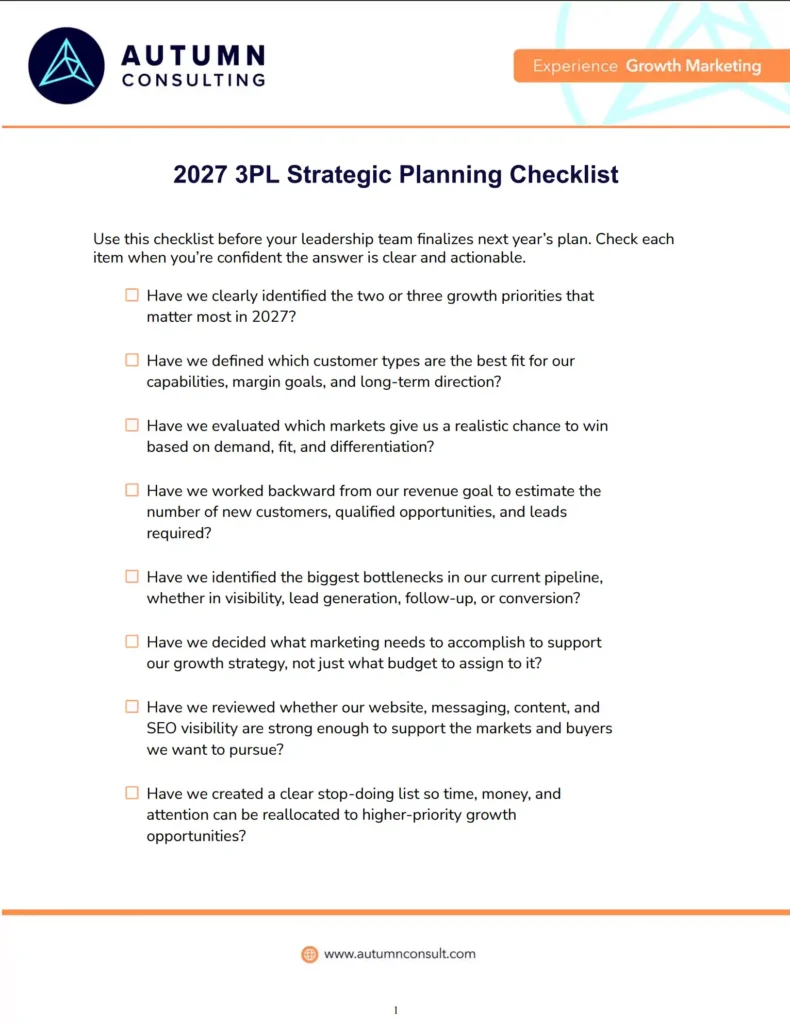
Fill out the form below to receive the free printable checklist.
Use this checklist before your leadership team finalizes next year’s plan:

We use cookies to improve your experience on our site. By using our site, you consent to cookies.
Manage your cookie preferences below:
Essential cookies enable basic functions and are necessary for the proper function of the website.
CleanTalk offers effective spam protection and website security solutions to enhance user experience.
Service URL: cleantalk.org (opens in a new window)
CloudFlare provides web performance and security solutions, enhancing site speed and protecting against threats.
Service URL: developers.cloudflare.com (opens in a new window)
Statistics cookies collect information anonymously. This information helps us understand how visitors use our website.
Google Analytics is a powerful tool that tracks and analyzes website traffic for informed marketing decisions.
Service URL: policies.google.com (opens in a new window)
Google reCAPTCHA helps protect websites from spam and abuse by verifying user interactions through challenges.
Vimeo is a video hosting platform for high-quality content, ideal for creators and businesses to showcase their work.
Service URL: vimeo.com (opens in a new window)
You can find more information in our Cookie Policy and .